
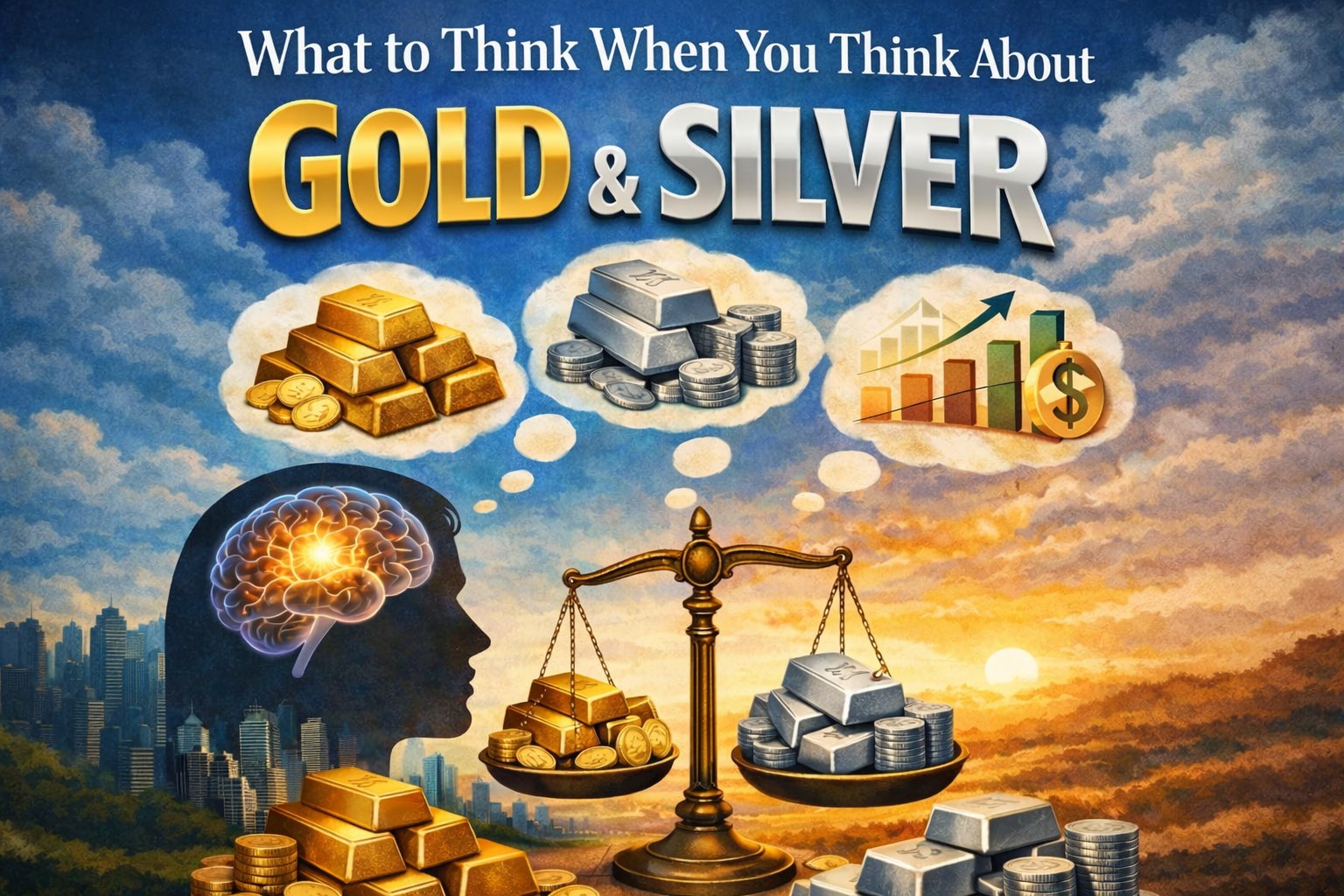
Gold has been money for over 5,000 years. Silver built empires. Yet in today's world of index funds, crypto, and AI-driven markets, most investors either obsess over precious metals or dismiss them entirely — and both reactions are wrong.
This guide cuts through the noise. Whether you're a curious beginner or a seasoned portfolio manager, here's how to think clearly about gold and silver — what they are, when they matter, how they behave, and where they fit in a modern portfolio.
What Gold and Silver Actually Are
Gold: The Original Reserve Asset
Gold is not an investment in the traditional sense. It doesn't generate cash flows, pay dividends, or build factories. It is a commodity with a uniquely monetary history — used as currency, a store of value, and a unit of account across virtually every civilisation that has ever existed. Today, central banks hold over 36,000 tonnes of gold as a reserve asset.
Gold's three primary roles today:
- Monetary reserve — Central banks hold gold as a backstop to their currencies.
- Portfolio insurance — Gold holds value during financial stress and geopolitical crisis.
- Inflation hedge — Over very long periods, gold preserves purchasing power against fiat currency inflation.
Silver: The Hybrid Metal
Silver is more complex — and more interesting — than gold. It straddles two worlds: monetary metal and industrial commodity. Silver is the best electrical conductor of any element and is found in virtually every smartphone, circuit board, and semiconductor. The energy transition is creating a structural, multi-decade surge in industrial silver demand.
- Solar panels — Silver paste is essential in photovoltaic cells.
- Electric vehicles — EVs use roughly twice the silver of conventional vehicles.
- Medical applications — Silver's antimicrobial properties make it indispensable.
- 5G and AI hardware — Both require silver-intensive electronic components.
Gold doesn't make you rich. It keeps you from getting poor in the wrong ways.
The Macro Drivers — What Actually Moves These Metals
The Single Most Important Variable: Real Interest Rates
If you want to understand gold, understand real interest rates — nominal interest rates minus inflation. When real rates are low or negative, the opportunity cost of holding gold falls and capital flows in. When real rates are high, cash and bonds offer real returns — gold becomes less attractive. Watch the 10-year TIPS yield. It is the single most reliable macro indicator for gold.
The US Dollar
Gold is priced globally in US dollars. When the dollar weakens, gold becomes cheaper for foreign buyers — demand rises, price rises. The DXY index and the gold price share a reliable inverse correlation over medium-term cycles.
Central Bank Demand
The underappreciated driver that changed the gold market in the 2020s. Emerging market central banks — China, India, Poland, Turkey, and dozens of others — have been buying gold at record rates, diversifying away from US dollar reserves. In 2022 and 2023, central bank gold buying hit multi-decade highs. This structural demand puts a floor under the price many Western investors have not fully priced in.
Key Macro Drivers at a Glance
| Macro Driver | Effect on Gold |
|---|---|
| Falling real interest rates | Bullish — lower opportunity cost |
| Rising real interest rates | Bearish — bonds become attractive |
| Weakening US dollar | Bullish — cheaper for global buyers |
| Strengthening US dollar | Bearish — more expensive globally |
| Geopolitical crisis | Bullish — flight to safety |
| Central bank buying | Bullish — structural demand support |
| Inflation expectations rise | Bullish — real asset demand |
| Risk-on equity rally | Often bearish — capital leaves safe havens |
The Great Debate — Bulls vs. Bears
The Bull Case
Gold bulls start with a simple observation: every fiat currency in history has eventually been debased or destroyed. The US dollar has lost over 97% of its purchasing power since the Federal Reserve was created in 1913. Gold has not. The bull case also rests on record global sovereign debt, accelerating de-dollarisation by BRICS nations, and the reality of systemic risk demonstrated by 2008, 2020, and the 2023 banking stress.
The Bear Case
Gold bears — and Warren Buffett is the most famous — make a fundamentally different argument: productive assets compound; gold doesn't. A dollar in gold in 1980 would be worth roughly $6 today. A dollar in the S&P 500 would be worth over $100. Gold is volatile (it fell 45% from its 2011 peak to 2015) and earns nothing.
The Honest Synthesis
Both camps are right — in different time horizons and economic environments. Gold is not an investment; it is monetary insurance. You buy fire insurance not expecting your house to burn down, but because the consequence of being uninsured when it does is catastrophic. The question is not whether to own gold, but how much insurance you need.
Silver's Unique Investment Profile
More Volatile, More Complex
Silver amplifies gold's moves — typically by 2x to 3x. In a gold bull market, silver usually outperforms. In a downturn, silver falls harder. This makes it a higher-octane version of the gold trade.
The Gold/Silver Ratio
The gold/silver ratio tells you how many ounces of silver it takes to buy one ounce of gold. Historically around 15:1, it now hovers around 80–90:1. The ratio hit 125:1 during the COVID crash of March 2020 — silver subsequently outperformed gold massively over the following 12 months. High ratio = silver is historically cheap relative to gold.
The Industrial Demand Story
The energy transition is creating a structural, multi-decade demand driver for silver. Global solar installations are targeting 500+ GW per year by 2030, each gigawatt requiring 50–75 tonnes of silver. Meanwhile, silver mining supply has been broadly flat for years. The supply/demand dynamics could be significantly tighter than for gold.
How to Actually Own Gold and Silver
Physical Metal
Coins and bars are the purest form of ownership — no counterparty risk. Storage and insurance add roughly 0.5–1% annually. Physical metal trades at a premium to spot (2–8% for gold, 10–20% for silver). Ideal for long-term 'break glass in emergency' holdings.
ETFs and Exchange-Traded Products
Gold ETFs like GLD and IAU offer easy, liquid, low-cost exposure (0.15–0.5% expense ratios). You own a claim on gold, not gold itself — in a severe financial crisis this distinction may matter.
Mining Stocks
Mining shares offer leveraged exposure: when gold rises 10%, a well-run miner might rise 20–30%. But miners carry operational, management, and geopolitical risk. Streaming companies like Wheaton Precious Metals offer exposure with lower operational risk.
Portfolio Allocation — How Much Is Right?
The 5–10% Rule
Most portfolio strategists recommend a 5–10% allocation to precious metals. Below 5%, the hedging effect is negligible. Above 15–20%, you are making a significant macro bet and accepting a meaningful drag on long-run returns relative to equities.
Gold vs. Silver Weighting
For a core allocation, weight toward gold — more liquid, more institutionally accepted, less volatile. A typical approach: 70–80% of precious metals allocation in gold, 20–30% in silver. Increase the silver weight tactically when the gold/silver ratio is elevated above 80.
Common Mistakes to Avoid
- Treating gold as a short-term inflation hedge. It isn't reliable on a 1–3 year basis.
- Confusing ETFs with physical gold. In a genuine financial crisis, this distinction could matter.
- Over-allocating during a crisis. Don't let fear push you to 30–40% allocations.
- Ignoring storage costs and insurance on physical metal.
- Chasing silver junior miners without understanding mining equity risk.
- Expecting gold to hedge a stock market correction — gold and equities can fall together.
- Ignoring the gold/silver ratio when sizing relative positions.
A Clear-Headed Framework
Gold and silver are insurance, not investments. Size them accordingly — enough to matter if you need them, not so much that they drag your portfolio down over decades.
The primary drivers are real interest rates, the dollar, and geopolitical risk. Watch TIPS yields. Watch the DXY. Watch central bank reserve strategy. These tell you more about gold's direction than any short-term price movement.
Silver is gold with leverage plus an industrial demand story. More volatile, more complex, potentially more rewarding — but only for investors who understand what they own.
The best time to think about owning gold and silver is before you need them.
Own it before you need it. Size it appropriately. Understand what it is.
Disclaimer: This article is for informational and educational purposes only and does not constitute financial or investment advice. Always consult a qualified financial professional before making investment decisions.